





Built the way AI
assistants Like to quote.
Every Ranko article is built in the shape engines cite: a top summary, question headings with direct answers, and an FAQ block.
From draft to quotable article in 4 structural moves
A summary an engine could lift opens it. Question headings carry answers, tables, an FAQ closes it.
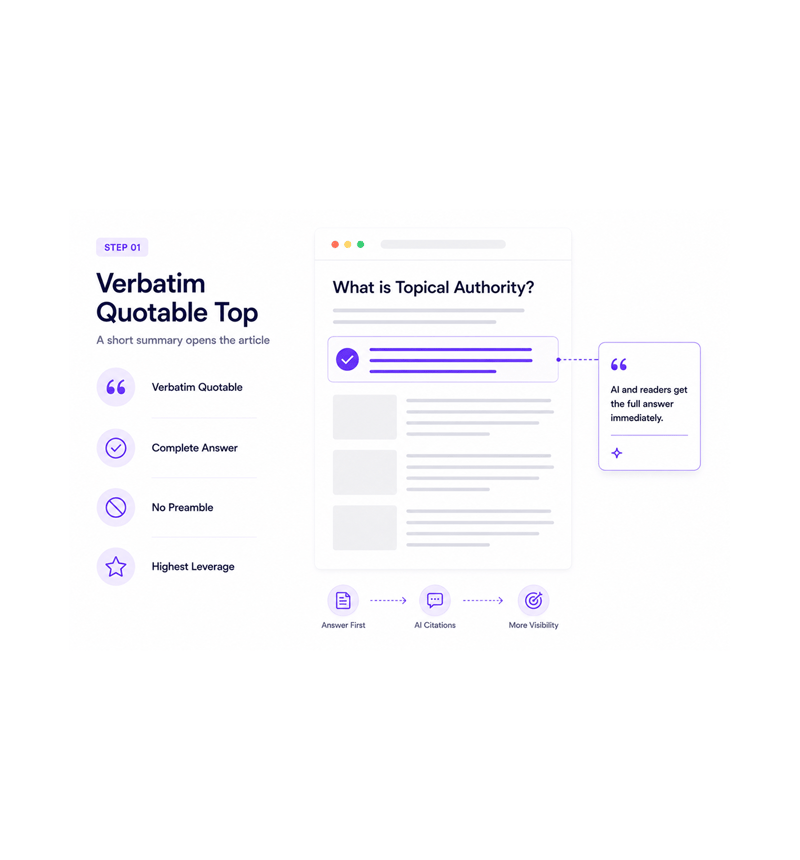
Verbatim Quotable Top
A short summary opens the article
The opening paragraph delivers a complete, direct answer to the article's primary question in a shape an AI assistant could lift verbatim. No teaser, no preamble. Read only this paragraph and you still get the answer.
- Verbatim Quotable
- Complete Answer
- No Preamble
- Highest Leverage
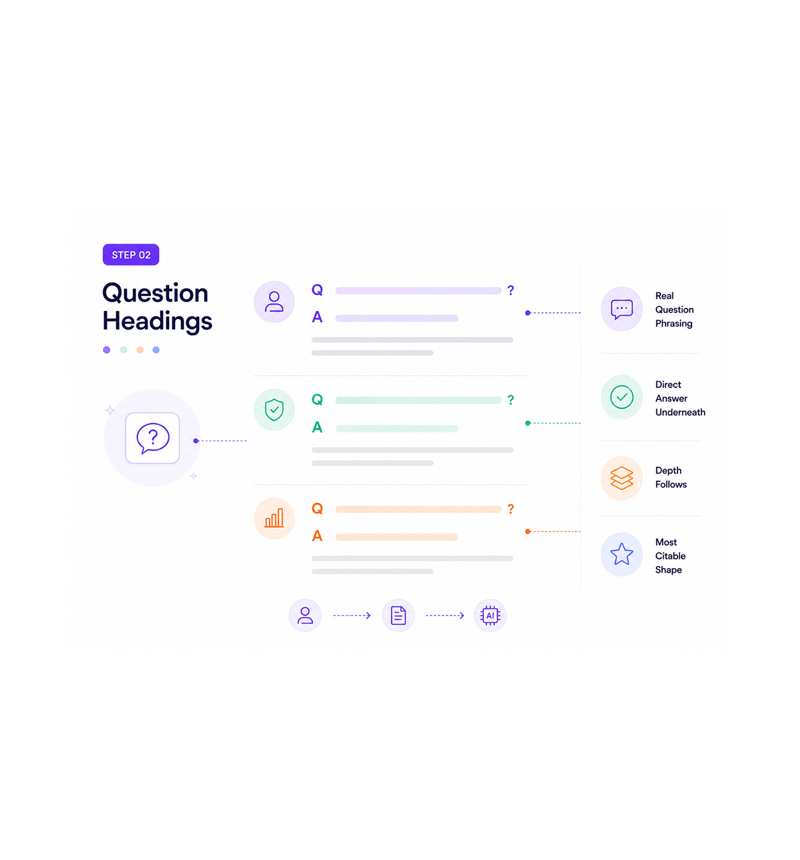
Question Headings
Question style headings with direct answers
The body is organised under headings phrased the way real people ask, like "How do I choose a project management tool for a small team". Under each sits the direct answer in the first sentence, depth following. The most citable block in an article.
- Real Question Phrasing
- Direct Answer Underneath
- Depth Follows
- Most Citable Shape
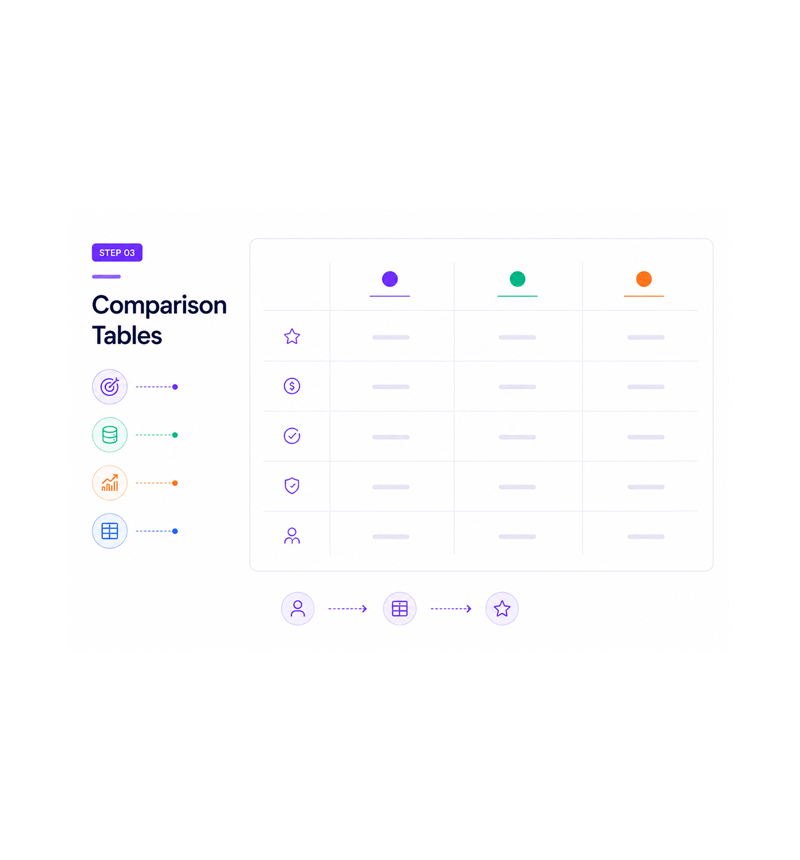
Comparison Tables
Comparison tables where they actually help
When the article needs to compare options, tools, plans, or approaches, a clean table appears in the right section, each row a dimension and each column an option. Tables get cited at far higher rates than prose, and only appear when they help.
- Where Useful Only
- Structured Data
- High Citation Rate
- Clean Rows & Columns
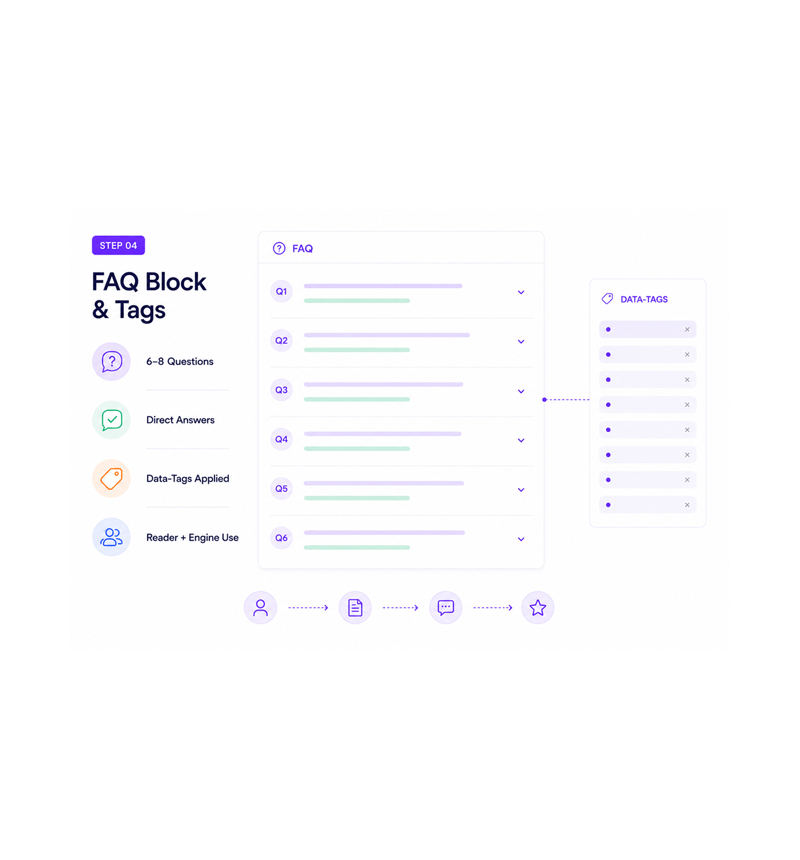
FAQ Block & Tags
FAQ block at the bottom with page data tags
Every article closes with an FAQ block, six to eight questions the body did not fully answer, with direct answers. It serves readers and signals to engines what the page covers. The right tags apply automatically.
- 6–8 Questions
- Direct Answers
- Data Tags Applied
- Reader + Engine Use
Six reasons your content stops being unquotable
Once a team ships articles in the shape engines cite, burying the answer stops being acceptable.

AI engines quote the summary verbatim
The opening summary is the paragraph an engine lifts for a citation. Without one, it builds an answer from scattered sentences and cites a rival.

Question headings match how people actually ask
"How do I choose a project tool" is a question. "Project management software" is a keyword. Question headings match prompts and get cited.

Direct answers under headings beat buried answers
The article that puts a direct answer in the first sentence gets cited. The one that leads with three paragraphs of context does not. Answer first.

Tables get cited more than paragraphs of comparison
Comparison content in prose makes the engine extract structure. A clean table hands it over and gets cited at far higher rates. A table wins.

The FAQ block doubles as structured data
The FAQ block serves readers and signals to engines what the page answers. With the right tags, both SEO and AEO reward it. One block.

Built in from the start, not retrofitted later
Most teams find answer-first structure after publishing hundreds of articles. Ranko writes the citation friendly shape from paragraph one.
AI engines quote the summary verbatim
The opening summary is the paragraph an engine lifts for a citation. Without one, it builds an answer from scattered sentences and cites a rival.
Question headings match how people actually ask
"How do I choose a project tool" is a question. "Project management software" is a keyword. Question headings match prompts and get cited.
Direct answers under headings beat buried answers
The article that puts a direct answer in the first sentence gets cited. The one that leads with three paragraphs of context does not. Answer first.
Tables get cited more than paragraphs of comparison
Comparison content in prose makes the engine extract structure. A clean table hands it over and gets cited at far higher rates. A table wins.
The FAQ block doubles as structured data
The FAQ block serves readers and signals to engines what the page answers. With the right tags, both SEO and AEO reward it. One block.
Built in from the start, not retrofitted later
Most teams find answer-first structure after publishing hundreds of articles. Ranko writes the citation friendly shape from paragraph one.




10800+
Teams optimising for the quote, not just the rank
Built for teams who want to be quoted, not just ranked
Founders, content leads, agencies, and SaaS growth teams use Ranko's Answer First Structure to ship citation friendly content: quotable summaries, question headings, tables, and tagged FAQs.
Summary
Headings
Tables
block
Summary, headings, tables, FAQ
A verbatim quotable summary opens the article. Question style headings organise the body with direct answers underneath. Comparison tables appear where they help. An FAQ block closes it.
Everything the structure layer ships with
A complete citation friendly structure toolkit in the same AEO platform you use, so articles ship in the shape engines quote.

Verbatim Quotable Top Summary
The opening paragraph delivers a complete answer an AI assistant can lift verbatim. It sits where the citation looks.

question style H2 Headings
Body sections sit under headings phrased how people ask, full questions not keywords. The heading matches the prompt, so the engine pulls it.

Direct Answer Under Every Heading
The first sentence under every heading delivers the answer; depth follows. The engine that wants to cite finds it immediately.

Comparison Tables Where Useful
When the article compares options, a clean table appears, built for engine extraction. Tables get cited more.

FAQ Block at the Bottom
Every article closes with six to eight FAQs and direct answers, a signal for search and answer engines.

Structured Data Tags Auto Applied
Page tags apply automatically: FAQ tags on the block, article tags on the body, organisation on the publisher.
Everything you need to know
Common questions on quotable summaries, heading shapes, tables, page data tags, and SEO.
Ranko writes content that ranks and gets cited.
Publish AI-written, search-optimized articles that win on Google today and get cited by AI engines tomorrow.
- 10x
- faster content production
- 3.4x
- more organic traffic
- 0
- ranking opportunities missed
- 87%
- of articles rank in 90 days