





Custom Fields Built for
Every Team Workflow
Define custom columns per project: text, number, date, boolean, select, URL, email. Filter and sort by their values.
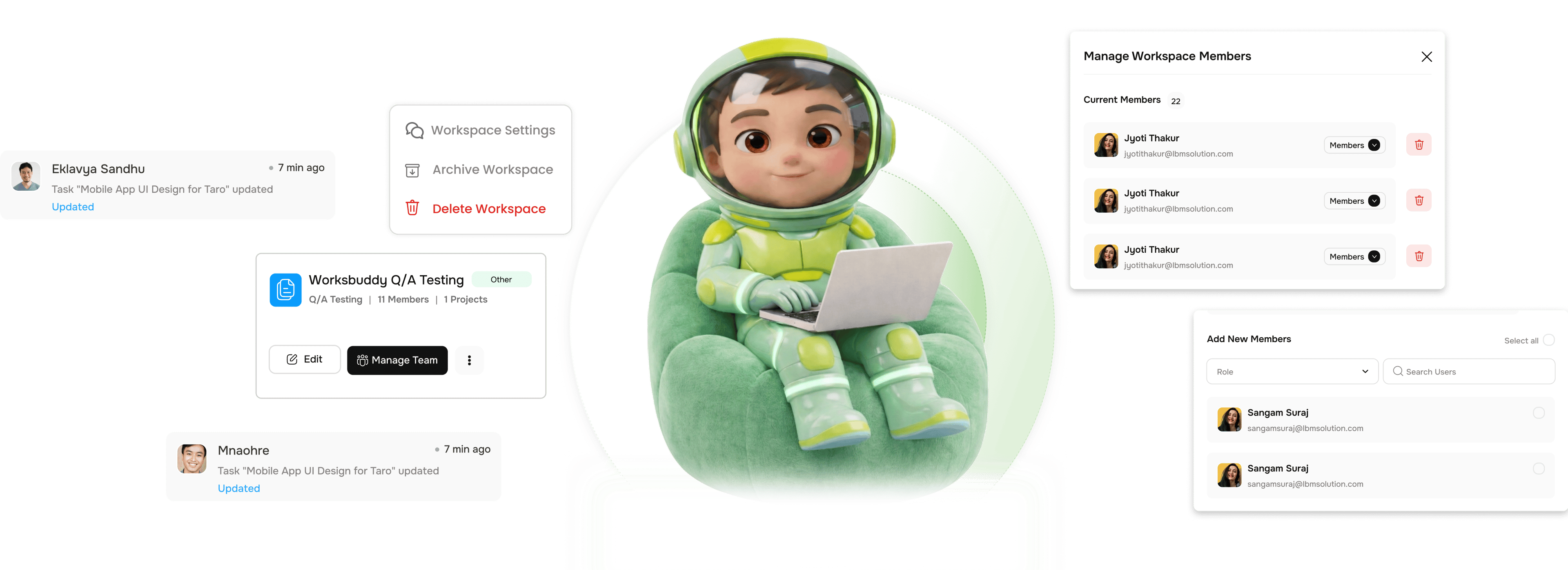
From a project with generic fields to one that fits your workflow exactly
Define the fields your project needs. Set values task by task. Filter, sort, and see them everywhere.
Define
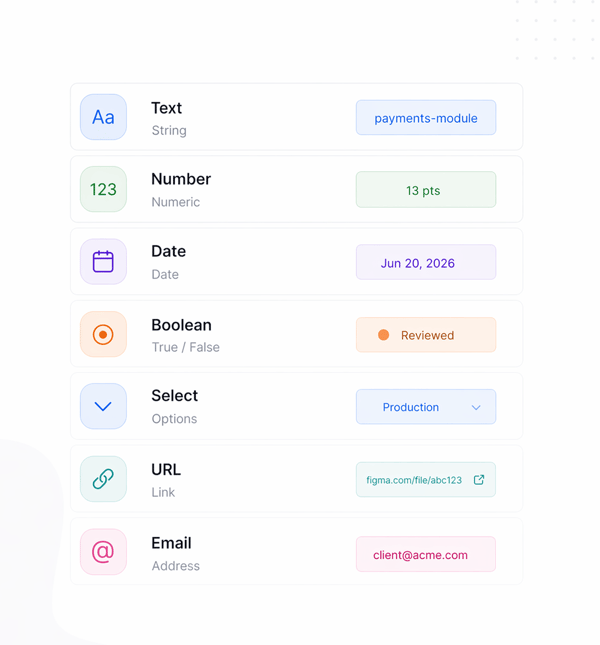
Seven types. Every kind of project data covered.
Custom fields are defined per project. Name the field and choose its type, and it becomes a column on every task: visible in List view, available for filtering and sorting. Seven types cover most needs.
Filter & Sort
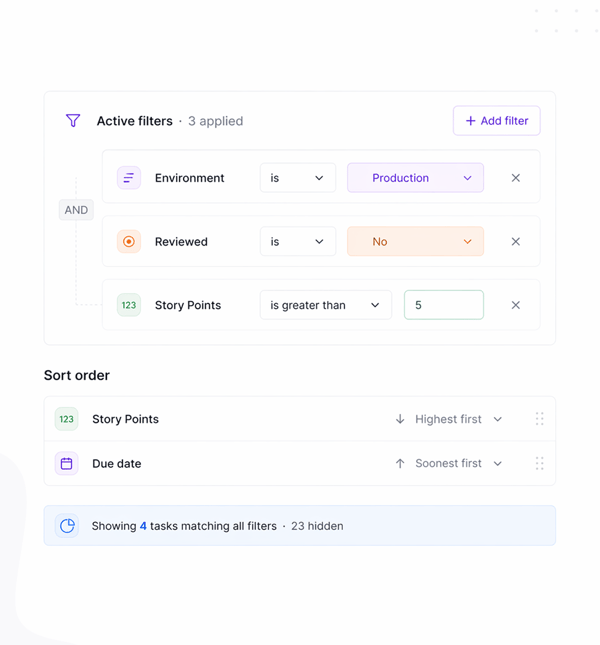
Filter and sort by any custom field in any combination.
Once they have values, custom fields become full filter and sort criteria. Combine them with standard filters using AND logic, and sort on any type. The result count updates as filters apply.
Display
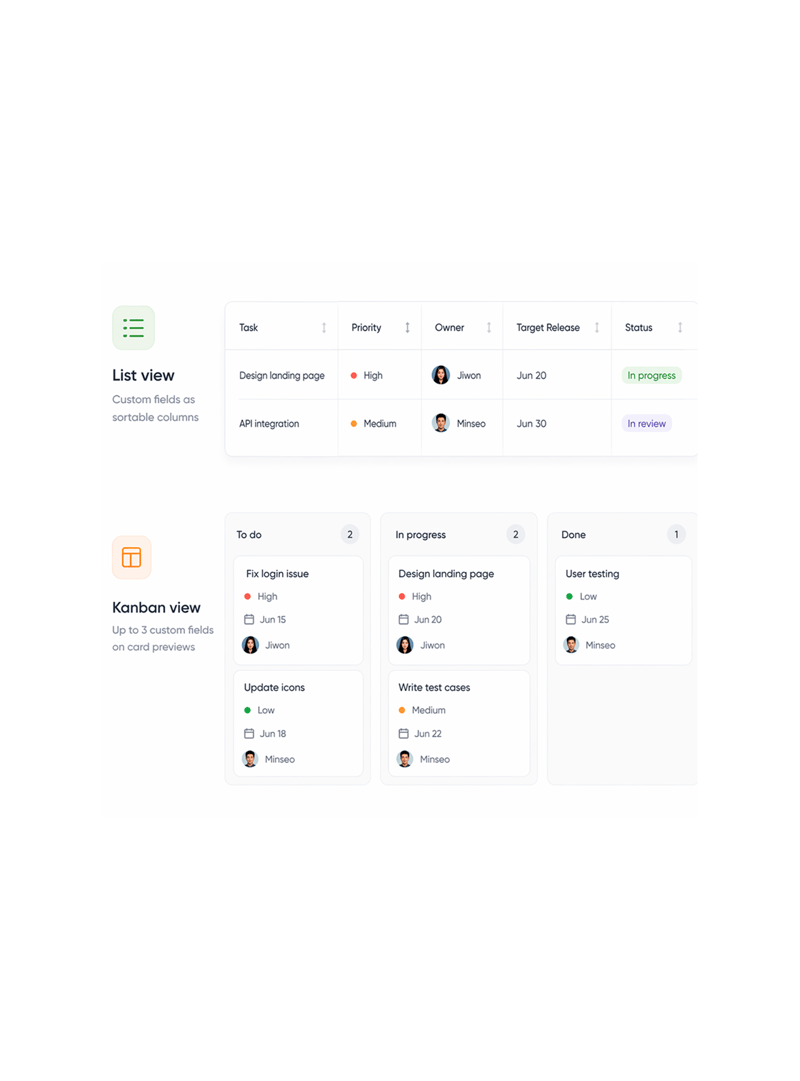
Custom fields follow tasks into every view mode.
Custom fields aren't buried in the task detail panel. They render across every TARO view: List, Kanban, Calendar, Gantt, Bug Tracker, and Custom tabs. They're sortable in List and shown on Kanban cards.
Edit
Click any cell. Edit the value. No task panel required.
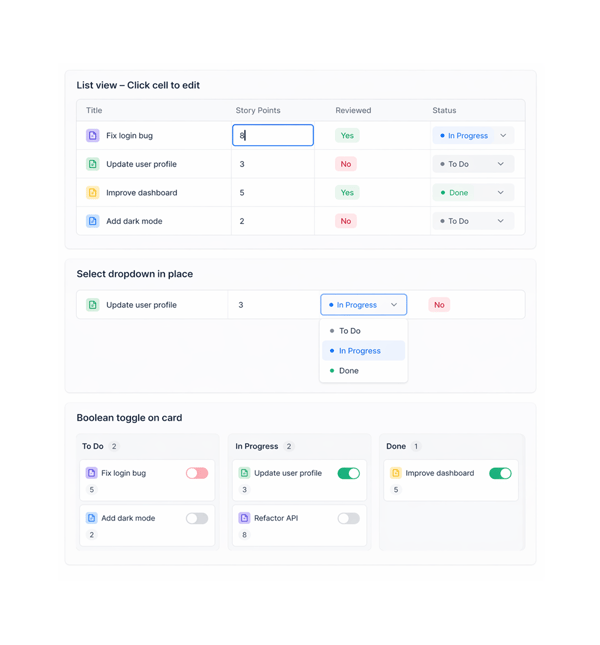
Custom field values are editable inline: click a List cell and type, toggle a boolean on a Kanban card, pick a select option in place. No one opens task detail just to update a story point or flip a toggle.
- Click cell to edit inline
- Select dropdown in place
- Boolean toggle on card
- AI score applied
- Live table update
Six reasons teams never go back
Every project has data that matters to it. Story points for engineering, severity for QA. Custom fields make TARO fit.

Seven types cover every data shape a project has
Text, number, date, boolean, select, URL, and email handle every kind of project-specific data, from story points to environment flags to client addresses.

Filter by custom field values just like built in ones
Custom fields are filter criteria. "Production tasks with Story Points above 8 that aren't reviewed" is a filter, not a spreadsheet export.

Sort by any field number fields sort correctly
Number fields sort numerically, not lexicographically: Story Points 13 ranks above 8. Dates sort chronologically, selects alphabetically.

Fields follow tasks into every view not just the detail panel
Custom fields don't hide. They appear as columns in List, card data in Kanban, sidebar columns in Gantt, and date indicators in Calendar.

Inline editing means zero friction to keep values current
The harder a field is to update, the less reliably it stays current. Inline editing removes the friction: click the cell, change the value, move on.

Custom fields are project scoped no cross project noise
A Story Points field in the Payments project doesn't appear in Marketing. Fields are defined per project, so each team sees only what's relevant.
Seven types cover every data shape a project has
Text, number, date, boolean, select, URL, and email handle every kind of project-specific data, from story points to environment flags to client addresses.
Filter by custom field values just like built in ones
Custom fields are filter criteria. "Production tasks with Story Points above 8 that aren't reviewed" is a filter, not a spreadsheet export.
Sort by any field number fields sort correctly
Number fields sort numerically, not lexicographically: Story Points 13 ranks above 8. Dates sort chronologically, selects alphabetically.
Fields follow tasks into every view not just the detail panel
Custom fields don't hide. They appear as columns in List, card data in Kanban, sidebar columns in Gantt, and date indicators in Calendar.
Inline editing means zero friction to keep values current
The harder a field is to update, the less reliably it stays current. Inline editing removes the friction: click the cell, change the value, move on.
Custom fields are project scoped no cross project noise
A Story Points field in the Payments project doesn't appear in Marketing. Fields are defined per project, so each team sees only what's relevant.




800+
product teams already using TARO
Built for every team whose tasks
carry more than a title and a due date
Engineering teams tracking story points and environments, QA teams flagging severity and reproducibility, and ops teams logging client data all define custom fields that make TARO fit how they actually work.
Custom field types
Fields per project
Views that display fields
Click to edit inline
Story points, environment, and PR link live on every task not in Jira.
Teams add three custom fields per sprint project: Story Points, Environment (Dev/Staging/Prod), and PR Link. Planning filters by points, and the PR is one click away.
Custom fields power the views. These features power the workflow.
Once your tasks carry the right data, TARO's views and intelligence make it work for your team.

Task Management
The full task layer: rich text, 7 statuses, 4 priorities, subtasks, dependencies, time tracking, and 6 view modes that custom fields extend with your data.

Custom Tabs
Save any filter as a named tab, including custom field filters. "Unreviewed Prod bugs above P1" becomes a one-click tab.

Kanban Board
Configurable columns with card previews showing up to 3 custom fields alongside priority and assignee, so the board tells the story.

Sprint & Agile
Story points stored as a custom number field feed directly into sprint velocity and capacity planning.
Everything you need to know about Custom Fields
Common questions from engineering leads, QA teams, and PMs evaluating TARO's custom field system.
Taro plans, tracks, and flags risks before they hit.
Keep every project on track with AI that spots slippage early and tells your team what to do next.
- 87%
- on-time delivery
- 2.4x
- team throughput
- 0
- deadlines missed
- 35%
- fewer status meetings